(Français)
Environmental organizations and local authorities in northeastern Haiti have denounced the project for an open-air gold mine by the Canadian company Unigold, near the Dominican town of Restauración, in the area of Dajabón, on the border. They warn of “devastating” consequences and “irreversible” impacts. Citizen mobilization have demanded that the Haitian State take a clear position, but so far no ministry nor the Prime Minister have made any statement on this issue. “The risks are very real,” our investigation concludes. “Both countries could pay a heavy price.”
The Canadian company Unigold, among the 10 largest gold producers in the world, has been exploring the border area of Restauración, a municipality of Dajabón, since the early 2000s.
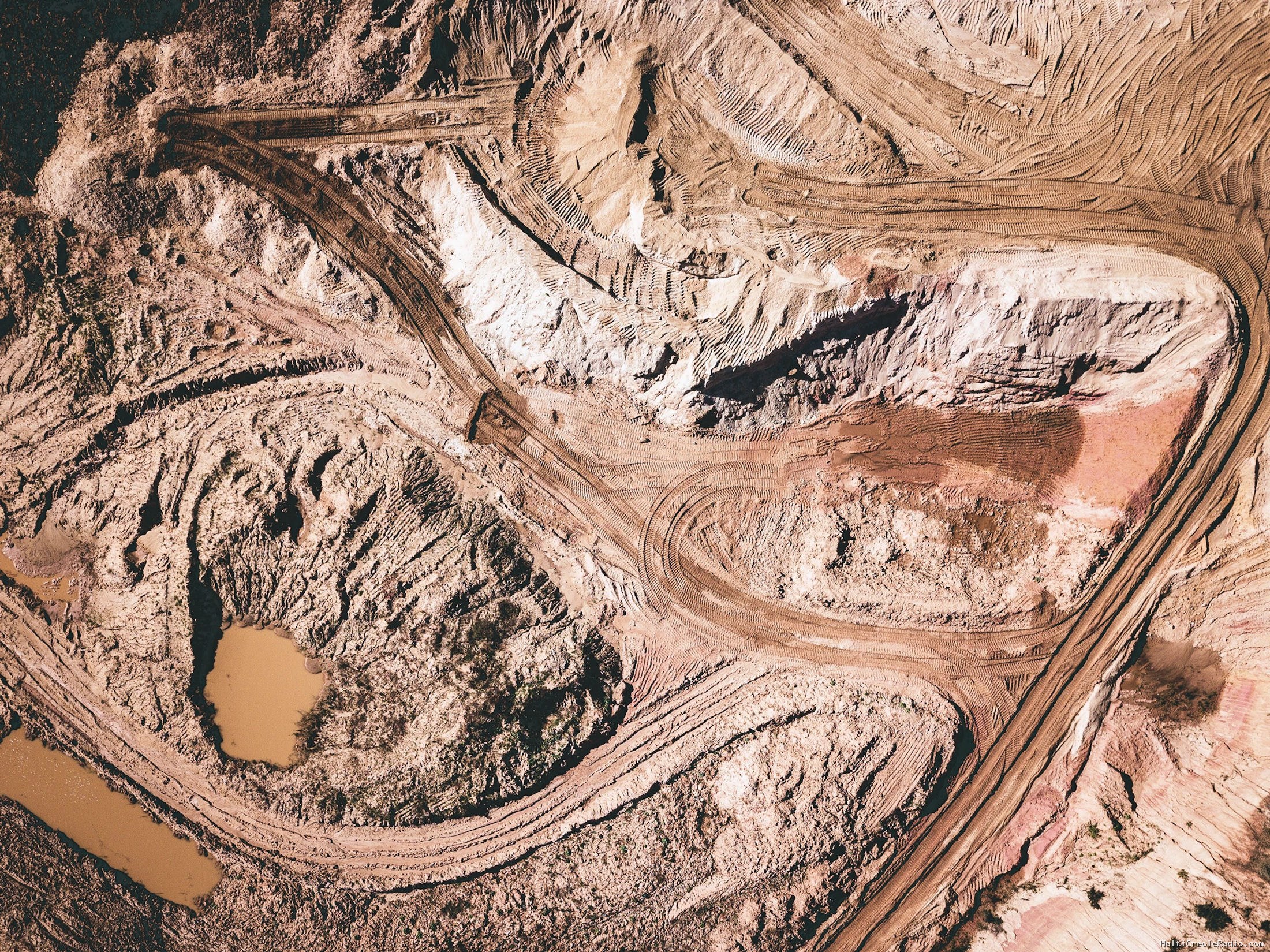
In 2022, a feasibility study confirmed the presence of a deposit estimated at nearly 15 million ounces of gold. The Candelones site, where mining could begin, is based on a reserve of 4 million ounces (125 tons). It could produce about 100,000 ounces per year, or three tons, over 25 to 30 years. The Dominican authorities see it as a promising project, bringing economic and social benefits, with an internal rate of return estimated at 44%. The investment could start paying off in a year and a half.
Before any operation, an environmental and social impact study (ESIA) must be validated. Unigold has been collecting data for five years and has organized visits and consultations, including in March 2026.
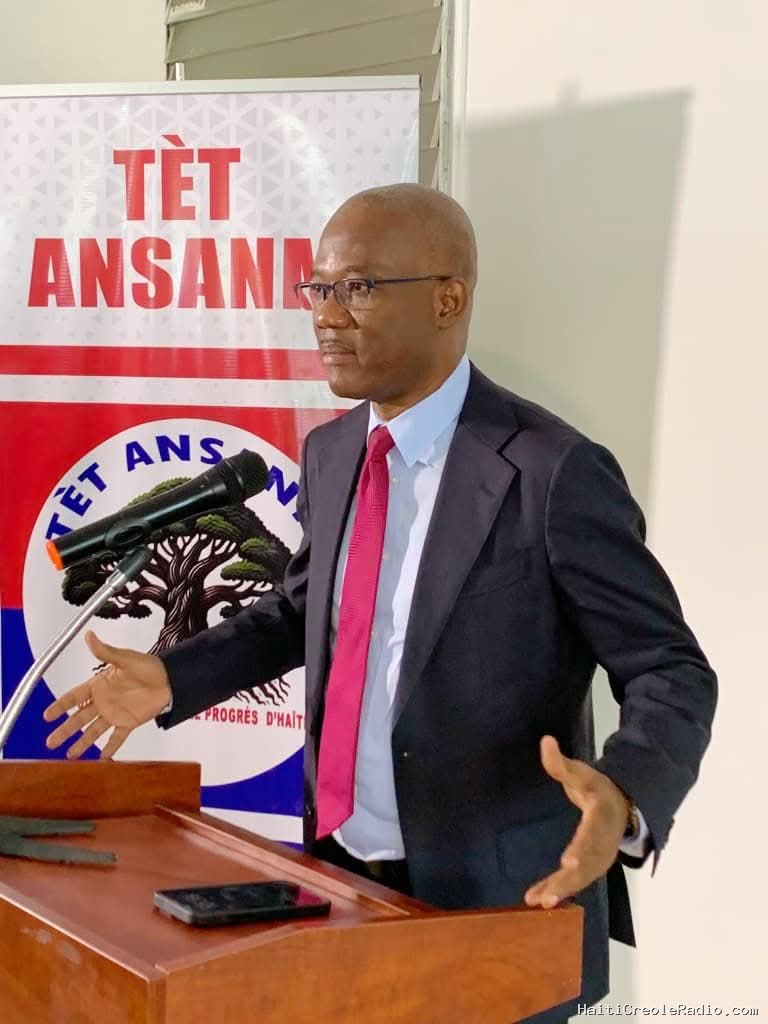
“They have almost finalized this study,” explains engineer-geologist Claude Prépetit. “But without the green light from the Dominican Environment Ministry, no mining can begin. Presidential authorization will only come after this step.” He points out that it is still only a project, without official authorization. The ESIA must define the operating methods, environmental impacts, mitigation measures, and the budget necessary for the management of the mine.
The island’s north, a disputed gold corridor
The Restauración mining project will not see the light of day for several years. It is located in a vast corridor of mineralization crossing northern Haiti and the Dominican Republic. On the Haitian side, there are the deposits of Morne Grand Bois, Morne Bossa, and Failles B, totaling 31 tons of proven gold, according to the journal Géominergie (January 2023).
On the Dominican side, the Pueblo Viejo mine, currently in operation, is among the largest gold deposits in the world with nearly 500 tons of gold. While the Dominican Republic has considerable reserves, Haiti only has modest deposits, around 12 tons.
In the late 1980s, Haitian research confirmed the region’s potential. In 2006, the American company Newmont Venture Limited obtained a prospecting permit and carried out studies until 2012. The investigation proved positive, but a parliamentary resolution in 2013 suspended foreign mining permits, freezing all research.
“We know it’s a mineralized area,” explained Prépetit, director of the Bureau of Mines and Energy (BME). It is possible that the Dominican deposit has extensions on the Haitian side, but we cannot verify this since work stopped in 2013.”
“We must continue research to hope to discover a deposit of international size,” he insisted, while recognizing that nothing is guaranteed. According to experts, the mineralization corridor in Hispaniola’s north could contain up to 50 million ounces of gold.
Cyanide and pollution: the fear of an ecological disaster
Gold mining represents a major problem for the environment. To be profitable, it employs a metallurgical process using cyanide, poured onto the rock in order to extract more than 80% of the gold. This highly toxic product leaves dangerous residues that must be stored after extraction.
“These wastes can contaminate surface water, irrigation, groundwater and affect soils,” Prépetit emphasized. “They also generate dust and disrupt the ecosystem. From an environmental point of view, it is very serious,” especially since the deposit is located about 10 kilometers from the Haitian border. “The Massacre River crosses the area and empties at Fort-Liberté. Poor exploitation could pollute water and soil, with serious consequences.”
The ESIA must make it possible to assess these risks. “We are waiting for it to be finalized to measure the impacts on Haiti,” he said. “We know they can be important, but we have to wait for the conclusions.”
The Kolektif Jistis Min or Collective for Mining Justice (KJM) shares these concerns. According to Nicolas Pierre-Louis, this 800-hectare mega-mine project threatens the population of the two countries: “It will enrich Unigold and its partners, but will leave misery, conflicts, and diseases, especially for the Dominican and Haitian farmers of the North-East, Artibonite, and the Center departments,” he said.
Pierre-Louis also denounced the Dominican desire to monopolize border resources and criticized the Haitian state’s inability to defend Haiti’s interests. Open-air mines consume a lot of water, risking shortages for agriculture, livestock, and domestic uses, and threatening rice production in certain communities.
“Environmental degradation could lead to the disappearance of animal and plant species,” he said. “Water contaminated with cyanide or sodium mercury would cause skin diseases and poison rivers, dealing a severe blow to agriculture. Beyond the ecological damage, this mining could also generate conflicts between the two countries, particularly among farmers living along the border.”
Engineer-geologist Claude Prépetit estimated that the environmental impact will depend on Dominican management. In Pueblo Viejo, where 700,000 to 800,000 ounces of gold are mined each year, authorities have protection systems in place. At Dajabón, the Candelones project forecasts production seven times lower: around 100,000 ounces per year. “It’s a small project,” Prépetit said in an interview with Enquet’Action. “The Dominicans already have the experience and know what to do to preserve the environment.” According to him, the possible impacts will first manifest themselves in the Dominican Republic: “Their communities will be hit first,” said Prépetit, who has been a public official for over 50 years. “Haiti will be affected indirectly. It is normal for Dominican communities to oppose it, but this will not stop the mining. The project is too profitable for the Dominican economy.”
But concerns persist. The Francophone Action Group for the Environment (GAFE) in Haiti denounces major risks: contamination of cross-border rivers, including the Massacre and the Artibonite (both essential to agriculture and food), pollution of groundwater, destruction of aquatic ecosystems, and a threat to food security. “Gold mining can release heavy metals such as arsenic, lead, or cadmium, capable of lastingly polluting waterways and soils,” warns the GAFE. These contaminations would threaten water quality, agriculture, biodiversity, and the health of populations. The organization emphasizes that the project’s proximity to the border increases the risks to natural resources and Haitian communities.
Citizen mobilization against the mining project
It’s not just the BME that has reservations. Haitian civil society organizations are multiplying press releases, conferences, and meetings to denounce gold mining in the Dominican Republic. For several months, a vast resistance movement has been organizing.
In Ouanaminthe, in Haiti’s northeast, an community meeting brought together nearly 150 participants. Grassroots organizations and local authorities expressed their opposition and concern about the silence of Haitian authorities.
The GAFE has sent correspondence to the Ministry of the Environment and the BME, demanding “urgent action to protect citizens’ rights and border ecosystems.” It calls for potentially affected Haitian communities to be recognized as stakeholders in the assessment of environmental and social impacts.
In this open letter, the GAFE criticizes the authorities for their inertia: “The planned technology uses very toxic substances with irreversible effects on health. You have not communicated anything to the Haitian people or to local organizations to protect their rights and our heritage,” one reads in the document, which directly challenges Claude Prépetit on his “primary responsibility” to advise the State and the population.
“These wastes can contaminate surface water, irrigation, groundwater and affect soils.”
The GAFE urges the Haitian state to assume its leadership, engage in binational dialogue, and invoke international law to defend its fundamental rights. “We speak for your children and your descendants,” the organization wrote.
The protest is also affecting local communities. On Jan. 20, 2026, the municipal administration of the Haitian town of Cerca-la-Source sent a letter to the Interior Minister, Paul Antoine Bien-Aimé, to denounce Unigold’s project in Restauración. This letter, of which Enquet’Action obtained a copy, has remained unanswered. In it, Cerca-la-Source’s three mayors pointed out that Restauración is a neighboring town across the border. “It is rumored that the Canadian company Unigold plans to extract gold in this area,” they wrote. “This initiative could have negative consequences on the municipalities of the Haut Plateau Central and the North-East.” They asked the minister to act “in the direction of the common good,” adding: “We make it our duty to inform you of this in order to avoid damage to already vulnerable region.”
On Feb. 27, 2026, Unigold announced on its website that the Dominican authorities are moving towards authorizing a complete study of environmental and social impacts (ESIA), a step prior to operation. On Mar. 3, an official visit to the site by the Dominican Ministry of the Environment was presented as the last step before validation of the terms of reference. This decision could accelerate the project schedule and bring the operational phase closer. The GAFE reacted the same day with a press conference, alerting public opinion and central authorities to the threats weighing on Haitian ecosystems and communities, and demanding urgent intervention from the State.
Asked about the mobilization of grassroots organizations, Claude Prépetit considers their concerns legitimate but without direct effect: “The communities of the North-East are right to be concerned,” he said. “But the mining will be done in the Dominican Republic, not Haiti. All the demonstrations on the Haitian side cannot prevent the Dominicans from exploiting their deposit. It’s impossible.” According to him, only mobilizations carried out on Haitian territory could push the State to take measures, anticipate negative impacts, and begin an official dialogue with the Dominican Republic.
Between diplomacy and international law
Kolektif Jistis Min considers it urgent that communities put pressure on the State so that it positions itself in the national interest and that of food-producing farmers. According to the KJM, Haiti’s social movements must organize meetings with Dominican peasants to lead a joint mobilization and denounce both their States and the Unigold company.
“The main thing is to put pressure on the Haitian state in order to answer the question diplomatically,” said KJM’s manager in an interview with Enquet’Action.
For environmental activist Johnson Samuel Charles, the mining project goes beyond the economic framework and falls under international environmental law. The Stockholm Declaration (1972) requires states to ensure that their activities do not cause damage to other countries, a principle reinforced by the Rio Declaration (1992). He notes that the peoples’ right to freely dispose of their natural resources is recognized by the International Covenant on Civil and Political Rights.
“The exploitation of resources cannot be done to the detriment of the survival of populations and their ecosystems,” he insisted. “Any activity likely to have major impacts must be subject to rigorous evaluations, public consultations, and cooperation between neighboring states.”
For him, a nation’s true wealth lies in the preservation of its rivers, soils, forests, and ecosystems. “Haiti may not have the power of great nations, but it must assert the universal legal principle,” he said, recalling that international environmental law constitutes a shield against destructive mining. He believes that Haitian authorities must contact international institutions to defend the country’s rights and avoid any complicity in a project that threatens future generations. Protecting the land of Haiti, he insisted, means honoring the heritage of ancestors and preserving the future.
The International Espoo Convention (1991) obliges signatory states to assess the environmental impact of major projects from their design. It imposes a cross-border procedures to prevent major damage, guaranteeing the participation of the public and foreign authorities. Adopted in Finland and entered into force in 1997 under the aegis of the UN and the European Economic Community, it requires the State of origin to notify and consult neighboring countries for any project with a significant cross-border impact. Neither the Dominican Republic nor Haiti have ratified it, unlike Canada, Unigold’s country of origin.
BME’s director Prépetit defends the state’s position: “We are not informed by the Dominican government. We are not a province of the Dominican Republic. They have nothing to tell us about their activities. We inform ourselves from company press releases, media reports, and our personal surveys. We are aware of what is happening.”
Faced with criticism, he believes that there is no reason to react yet. “As long as there is no official statement, everything can be considered as rumors,” he said. “The state is responsible. We cannot start making noise when the Dominican Republic has not yet given permission to Unigold. We must wait for the ESIA and authorization to begin.”
According to the KJM, Haitian authorities must communicate with border populations to reassure farmers and show that the State is not complicit. They must also encourage town halls to join forces with communities in order to inform the State of the actions carried out on the border line and maintain mobilization. “The Haitian state must begin talks with the Dominican Republic in order to defend the country’s interests,” said the KJM’s Pierre-Louis. “There should be a joint commission to analyze the feasibility of the project before its execution. Otherwise, the Haitian State must file challenges against the Dominican Republic and, if necessary, file a complaint at the international level to show its good faith.”
Take action and continue current actions
In March 2026, the BME sent the Public Works Ministry a letter accompanied by a checklist detailing the Dominican mining project. This document, viewed by Enquet’Action, contains important recommendations.
“Our duty is to warn the authorities that the Dominicans could be mining gold in Dajabón and that this could have negative impacts in Haiti,” the BME wrote. “We must prepare to face it.”
In this document, the BME recommended the creation of an intersectoral and interministerial commission to reflect on the issue. “Once informed, we notified the authorities so that they could take steps to protect our borders,” Prépetit wrote. “Not only to continue our research on the extension of the deposit on the Haitian side, but also to put in place environmental measures so that the population does not suffer negative impacts.”
In 2026, Prépetit estimated that mining would not begin before 2029. “For two years, the company will carry out construction, but there will not yet be production,” he said. “Haiti therefore has this time to anticipate, carry out an assessment, and establish an environmental inventory in order to compare before and after. At that time, we will be able to ask the Dominicans to take measures to avoid pollution on the Haitian side.”
To achieve this, he proposed that an interministerial commission should be made up of the Agriculture Ministry, the Environment Ministry and BME, all placed under the Foreign Affairs Ministry’s authority.
“This is not a matter that can be resolved between the Bureau of Mines and a Dominican ministry,” he said, stressing however the need to wait for official confirmation. “It is a State-to-State matter, and any conflict must be dealt with diplomatically. We cannot do anything until we have assurance that the Dominicans have given Unigold permission to operate. Let’s imagine that the study concludes with a refusal: exploitation will not take place. You should not be in a hurry or react emotionally. We must wait for official authorization and, based on this document, initiate a real dialogue with the Dominicans. Until we are certain, we cannot act.”
Resilient communities, despite everything, remain confident. The KJM leader Pierre-Louis believes that this Haitian resistance can lead to three results: 1) raising awareness in border communities of gold mining’s negative effects, 2) encouraging town halls to collectively and permanently denounce Unigold’s initiative, and 3) obtaining official talks between the two nations in order to achieve a moratorium on this mega-mining project.
The original version of this article was published in Enquet’Action in March.


Commentaires (0)
Laisser un commentaire
Aucun commentaire. Soyez le premier !